Guided Image Radiotherapy
It allows
- Confirm and follow tumor movement at the time of treatment.
- Minimize the risk of side effects.
- Higher doses of radiation – ultimately leads to higher cure rates.
- Correct changes in the patient's anatomy: Gain or lose weight over 25 to 35 days.
- It allows daily positioning to be corrected, since tumors can move several centimeters when patients breathe during treatment.
How does it work, and what are its benefits?
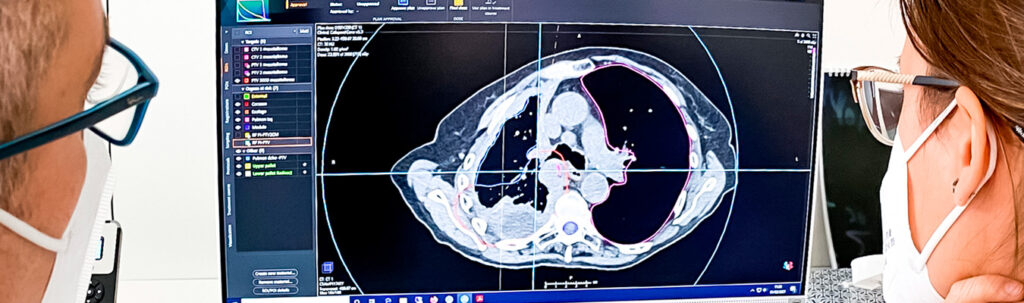
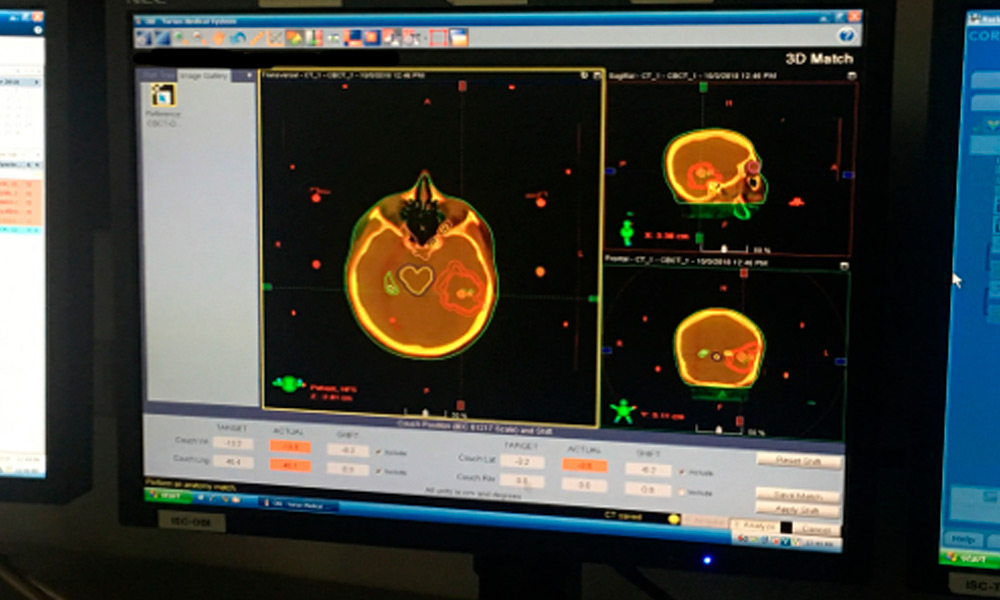
Different imaging modalities are used, such as X-rays, Computed Tomography (CT) scans, or Magnetic Resonance Imaging (MRI).
These images are compared with the initial treatment plan's images to detect any tumor displacement or changes in the patient's anatomy.
The radiation therapy machine can make immediate adjustments to ensure the radiation is accurately directed to the target area.
Benefits from IGRT
It improves treatment precision, allowing for higher doses to be delivered to the tumor.
It reduces the exposure of surrounding healthy tissues, thereby decreasing side effects.
It allows for the correction of movements or changes in tumor position that can occur between sessions or even during the same treatment session.
It's particularly useful for tumors located in areas with significant movement, such as the prostate, lungs, and abdomen.
Common Applications
- Prostate Cancer
- Lung Cancer
- Abdominal and pelvic tumors
Essentially...
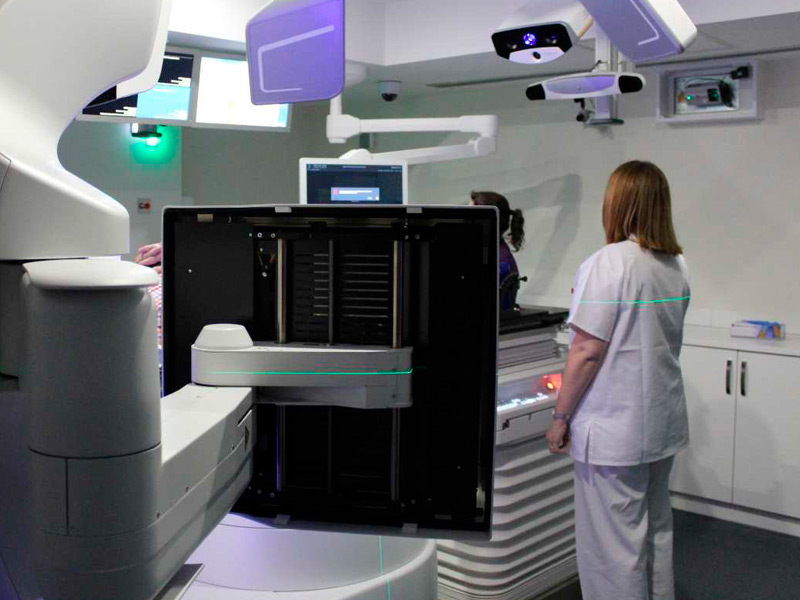
Image-Guided Radiation Therapy (IGRT) is a tool that significantly enhances the accuracy and safety of radiation therapy. It does this by integrating imaging directly during treatment to precisely guide the delivery of radiation.
Technique applied in Costa Rica exclusively at Radioterapia Siglo XXI.