
La cita de valoración es el primer paso para recibir el tratamiento de radioterapia. Es un espacio seguro donde el médico evalúa al paciente y evacúa todas sus dudas.
Continue reading
La cita de valoración es el primer paso para recibir el tratamiento de radioterapia. Es un espacio seguro donde el médico evalúa al paciente y evacúa todas sus dudas.
Continue reading
Radioterapia Siglo XXI is the only specialized center in the region to have the Accreditation Commission for Health Care ACHC International and the NOVALIS certification for radiosurgery treatments.
For cancer patients in Central America, finding a center that combines cutting-edge technology, international safety standards, and a comprehensive approach is no longer a challenge. From Costa Rica, Radiotherapy in the 21st Century It is consolidating its position as the regional benchmark in oncology, offering cutting-edge solutions for patients throughout the area.
If you or a loved one are looking for a specialized radiotherapy center, our team offers a comprehensive solution under one roof. Currently, Radioterapia Siglo XXI is the only center in Costa Rica where you can receive both treatments in the same place.
Our medical center centralizes all essential stages of cancer treatment, ensuring coordinated care that eliminates unnecessary transfers and optimizes medical outcomes:
Our team is highly committed to patient well-being and safety.
Furthermore, our facilities are comfortable and modern, specially designed for the comfort of each patient and their companions.
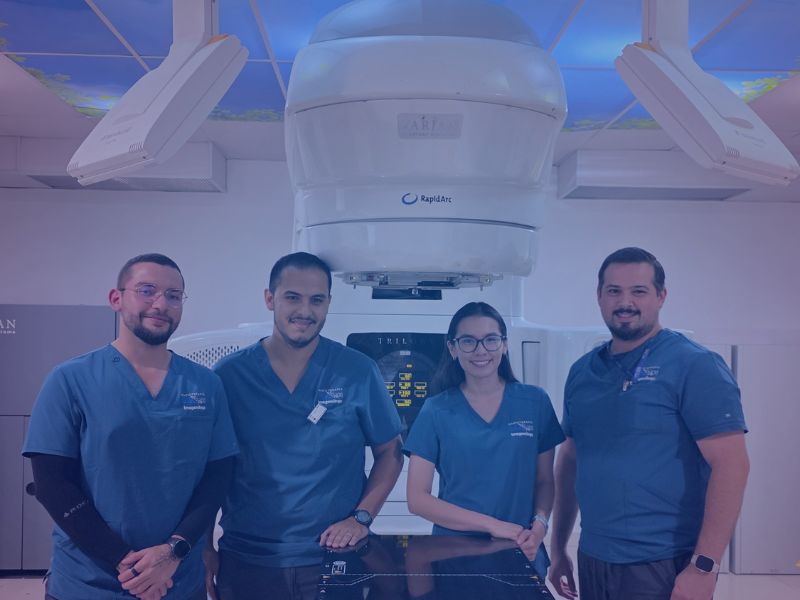
We know that facing a cancer diagnosis from another country presents logistical and emotional challenges. Therefore, we designed a service focused on facilitating every step of the process for our international patients:
En Radioterapia Siglo XXI transformamos la complejidad de la oncología en un proceso seguro, coordinado y humano. Ponemos nuestra experiencia, tecnología certificada al servicio de toda Centroamérica; demostrando que la mejor medicina del mundo está más cerca de lo que imagina.
Contact us today. Our team takes care of coordinating every detail of your arrival, managing your insurance, and your treatment plan in Costa Rica. Our goal is for you to focus solely on receiving the best treatments and on your recovery.

In Costa Rica, Radioterapia Siglo XXI is the only center in the country and the region to hold both Novalis Certification and ACHC International Accreditation.
Continue reading
The center currently holds Novalis Certification for its radiosurgery program and ACHC International Accreditation, which validates all of its clinical processes and patient care services.
Continue reading
Radioterapia Siglo XXI Earns Novalis Certification for Its Radiosurgery Program, Becoming the Only Oncology Center in Costa Rica to Receive This Distinction
Continue reading
For 12 consecutive years, Radioterapia Siglo XXI Medical Center has maintained international accreditation, making it the only oncology center in Costa Rica and the region to hold this distinction.
When we receive a cancer diagnosis, our first priority is finding the best possible treatment. However, a common and understandable question soon follows: How can I be sure that the care I receive meets the highest standards of safety and quality? The answer lies in international accreditation..
In Radiotherapy in the 21st Centurywe understand that trust is built on verifiable facts. That is why holding accreditation from the ACHC International is the foundation of our commitment to healthcare in Costa Rica, ensuring that every procedure is performed in accordance with global standards of safety and precision.
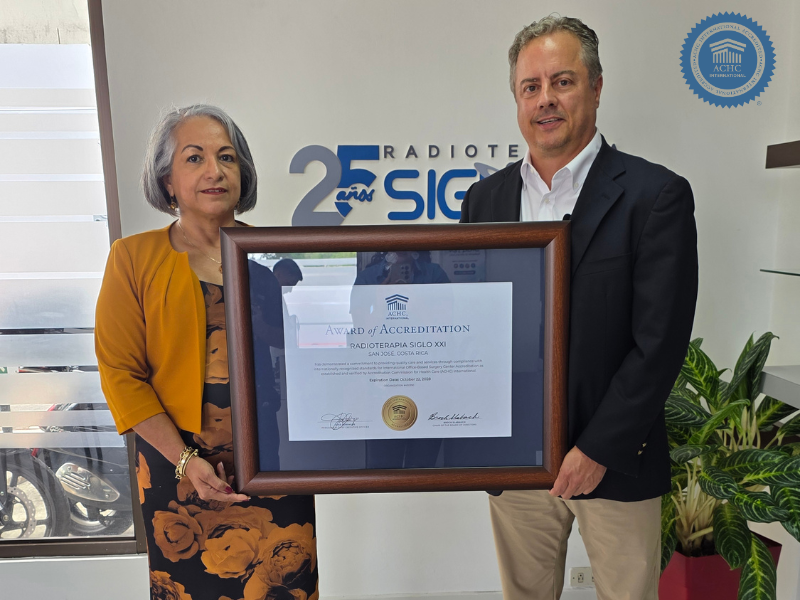
The ACHC International is a nonprofit organization based in the United States, globally recognized for accrediting quality in healthcare services. When an oncology center receives this accreditation, it means it has successfully passed a comprehensive evaluation of its clinical, administrative, and safety processes.
For patients, this accreditation provides the assurance that the medical center not only has the appropriate technology, but also uses it in accordance with international protocols that minimize risks and maximize treatment effectiveness.
Choosing a center like Radiotherapy in the 21st Century, which complies with ACHC International standards, offers essential clinical and patient-centered advantages:
For Costa Rican families, accreditation ACHC International eliminates the need to seek treatment outside our borders. Having a center in the country that meets these international standards allows patients to receive world-class care without being separated from their family support network—an emotional factor that plays a vital role in the cancer recovery journey.
Choosing an accredited medical center is, ultimately, an investment in peace of mind.. In Radiotherapy in the 21st Centurycertified quality is not a goal that has been achieved, but a standard we strive to raise every day, giving our patients the opportunity to fight cancer with the best tools that modern medicine has to offer.
We invite you to read What are the most common myths about radiotherapy? and to help dispel some of the common misconceptions that society associates with this treatment.

Receiving the news that you or a loved one needs radiation therapy can be overwhelming, often because of the misinformation surrounding this treatment. Many myths and misconceptions persist, making it natural to feel uncertain. However, understanding the scientific facts is the first step toward facing the process with confidence and peace of mind. Radiotherapy in the 21st Centuryin San José, Costa Rica, we are committed to providing clear, accurate information and compassionate, professional care. Below, we debunk some of the most common myths about radiation therapy so you can make informed decisions about your health.
The Reality: This is perhaps the most widespread myth. Receiving external radiation therapy is similar to having an X-ray the treatment itself is completely painless during each session. Patients do not feel the radiation while the machine is delivering it. Although some side effects, such as skin irritation or fatigue, may develop over the course of treatment, the radiation therapy session itself does not cause physical pain at the time it is administered.
The Reality: It is a common concern, but with external beam radiation therapy, —the most common type of radiation treatment—the radiation does not remain in the body once the machine is turned off. You can safely hug your children, sleep next to your partner, and be around pregnant women without posing any risk. The radiation only acts during the few seconds or minutes that the treatment is being delivered directly to the tumor. Note: In certain cases, such as brachytherapy or nuclear medicine treatments, your physician may provide specific safety instructions. However, for the vast majority of patients receiving external beam radiation therapy, there is no risk of emitting radiation after treatment.
The Reality: Unlike chemotherapy, which is a systemic treatment that affects the entire body, radiation therapy is a highly targeted treatment, localized treatment.This means it only affects the specific area where the radiation beam is directed. For example, if you receive radiation therapy to the pelvis or abdomen, you will not lose the hair on your head. Hair loss only occurs if the scalp itself is included in the treatment area.
The Reality: Nothing could be further from the truth. Radiation therapy is one of the most effective curative treatments available for cancer. Many patients achieve complete remission through radiation therapy, either as a standalone treatment or in combination with surgery and chemotherapy. Depending on the type and stage of cancer, its goals may include:
The Reality:
Thanks to the advanced technology available at specialized centers like Radioterapia Siglo XXI, we can deliver highly precise treatments using techniques such as IMRT (Intensity-Modulated Radiation Therapy) and VMAT (Volumetric Modulated Arc Therapy). These technologies shape the radiation beam to match the exact size and contour of the tumor, maximizing the dose to the cancer while minimizing exposure to the surrounding healthy tissues with millimeter-level precision.
Facing cancer requires both a compassionate team and advanced technology. Radiotherapy in the 21st Century we are proud to provide treatment that meets international standards, ensuring every patient receives the right dose, delivered to the right place, with the highest level of precision. Our goal is to minimize risks, protect healthy tissue, and maximize treatment outcomes.
If you would like to learn more about our radiation therapy treatments, you can email us at info@siglo21.cr or get in touch with us through our contact channels.

The holiday season, with its festivities and gatherings, is usually marked by great anticipation of joy. However, when facing a cancer diagnosis or treatment, such as the radiation therapyThese holidays can bring unique emotional and physical challenges. Radiotherapy in the 21st CenturyWe know your well-being is our priority. That's why we've prepared a guide with essential tips to help you navigate Christmas and New Year's and celebrate in a way that honors your health and emotions.
The biggest challenge of the holiday season is the social pressure to overindulge. Remember that your health comes first.
In a more crowded social environment, it is vital to take extra precautions, especially if your immune system is compromised due to treatment.
The contrast between their reality and the festive atmosphere can intensify feelings of sadness or loneliness.
New Year's celebrations don't have to be big to be meaningful.
In Radiotherapy in the 21st CenturyWe are committed to ensuring that the treatment of radiation therapy integrate it into your life as best as possible. We hope these tips will allow you to enjoy a peaceful end to the year focused on your recovery.

Facing a cancer diagnosis raises many questions, and finding the best treatment options becomes a top priority. Among the various available therapies, radiation therapy stands out as a cornerstone of modern oncology. But why is it an option worth considering? At
Radiotherapy in the 21st Centurywe aim to provide you with clear and objective information so that you, your family, and your friends can better understand its role on the path to recovery.
Radiation therapy is a type of cancer treatment that uses high-energy radiation to damage and destroy cancer cells, preventing them from growing and dividing. It works with great precision, targeting the tumor while striving to protect nearby healthy tissue.
Check a video about how a radiation therapy treatment is planned
Its effectiveness lies in its ability to act directly on the DNA of malignant cells. Cancer cells are more vulnerable to radiation than normal cells because they have a less efficient DNA repair capacity. This allows the treatment to selectively eliminate them.
The decision to undergo radiation therapy is based on a thorough evaluation of each individual case, but there are several key reasons why it is considered a valuable therapeutic option
Radiation therapy is highly effective for many types of cancer.In some cases, it may be the main treatment used to completely cure the disease. In others, it is used to shrink a tumor before surgery (neoadjuvant), to destroy remaining cancer cells after surgery (adjuvant), or in combination with chemotherapy to enhance its effects. Its precision allows the necessary dose to be concentrated in the affected area, maximizing damage to the tumor.
Unlike chemotherapy, which affects the entire body, radiation therapy is a localized treatment. This means that the radiation is focused directly on the area of the body where the tumor is located or where cancer cells are suspected to be.
This feature is crucial because it minimizes the impact on healthy organs and tissues, often resulting in fewer systemic side effects and a better quality of life during treatment. It is not a surgical procedure, so it does not involve incisions or general anesthesia—making it a suitable option for patients who cannot undergo surgery.
Even when complete cure is not the main goal, radiation therapy plays a vital role in managing symptoms associated with advanced cancer. It can be used to reduce pain caused by tumors pressing on nerves or organs, control bleeding, or relieve obstructions in airways or the digestive tract. This ability to improve well-being and quality of life is a significant—and often underestimated—benefit of radiation therapy.
Radiation therapy is rarely used in isolation. It is a highly adaptable therapy that combines effectively with other treatment modalities such as surgery, chemotherapy, immunotherapy, and targeted therapies. This multimodal approach allows for more personalized and powerful treatment plans, increasing success rates and improving long-term outcomes for patients.
The decision to receive radiation therapy should always be made together with your
oncology care team . At Radioterapia Siglo XXI, our specialists evaluate your cancer type, stage, overall health condition, and personal preferences to determine whether radiation therapy is the most appropriate option for you. We carefully weigh potential benefits against possible risks and side effects, and we will explain the proposed treatment plan in detail.
Radiation therapy is a powerful tool in the fight against cancer, supported by decades of research and technological advancements such as those published by U.S National Cancer Institute Understanding its principles and benefits can give you peace of mind and confidence in your treatment plan. If you have more questions, please don't hesitate to contact us.

Recibir un tratamiento de radioterapia es un paso crucial en la lucha contra el cáncer. Sin embargo, en Radioterapia Siglo XXI en Costa Rica, entendemos que el bienestar del paciente va más allá de la mera erradicación de las células cancerosas. Mantener una buena calidad de vida durante y después del tratamiento es esencial. Este artículo te brindará consejos prácticos para cuidar tu cuerpo y mente mientras avanzas en tu camino hacia la recuperación.
Priorizar tu bienestar durante la radioterapia no solo te ayuda a sentirte mejor, sino que también puede influir positivamente en tu capacidad para completar el tratamiento y recuperarte. Al manejar los efectos secundarios y cuidar tu estado emocional, puedes:
Aquí te presentamos estrategias y consejos para integrar en tu día a día:
La alimentación juega un papel vital. La radioterapia puede alterar el apetito o causar cambios en el gusto.
La fatiga es quizás el efecto secundario más frecuente.
La piel en la zona tratada requiere atención especial.
El impacto emocional del cáncer y su tratamiento es significativo.
Mantener un nivel de actividad física adecuado a tus posibilidades tiene muchos beneficios.
In Radiotherapy in the 21st Century, nuestro compromiso es con tu salud integral. No solo te ofrecemos tecnología de vanguardia para tu tratamiento de radioterapia en Costa Rica, sino también el apoyo y la información necesaria para que mantengas tu bienestar y calidad de vida durante todo el proceso. Si tienes preguntas o necesitas más orientación, no dudes en hablar con nuestro equipo.
