

Radioterapia Siglo XXI is the only specialized center in the region to have the Accreditation Commission for Health Care ACHC International and the NOVALIS certification for radiosurgery treatments.
For cancer patients in Central America, finding a center that combines cutting-edge technology, international safety standards, and a comprehensive approach is no longer a challenge. From Costa Rica, Radiotherapy in the 21st Century It is consolidating its position as the regional benchmark in oncology, offering cutting-edge solutions for patients throughout the area.
If you or a loved one are looking for a specialized radiotherapy center, our team offers a comprehensive solution under one roof. Currently, Radioterapia Siglo XXI is the only center in Costa Rica where you can receive both treatments in the same place.
Three pillars that define our clinical excellence
Our medical center centralizes all essential stages of cancer treatment, ensuring coordinated care that eliminates unnecessary transfers and optimizes medical outcomes:
- Radiotherapy and Advanced Radiosurgery: We use state-of-the-art technology to treat tumors with maximum precision, protecting the surrounding healthy tissues.
- Proven International Support: We simultaneously hold accreditation of the ACHC International (excellence in management and patient safety) and the Novalis Certification (the global gold standard in radiosurgery). We are the only center in Costa Rica and the region that holds this dual recognition.
Our team is highly committed to patient well-being and safety.
Furthermore, our facilities are comfortable and modern, specially designed for the comfort of each patient and their companions.
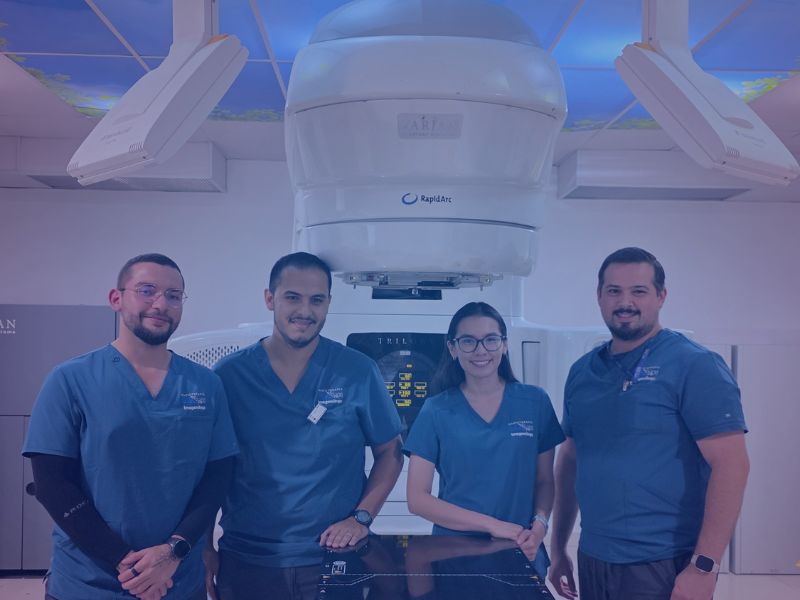
Why do patients from Central America choose us?
We know that facing a cancer diagnosis from another country presents logistical and emotional challenges. Therefore, we designed a service focused on facilitating every step of the process for our international patients:
- Career and Experience: We have over 25 years of medical experience and have successfully treated over 13,000 patients.
- World-Class Specialists: Our medical team comprises professionals trained at the most prestigious universities in Latin America, Europe, and Asia. Meet them our doctors.
- International Insurance Management: Our administrative team coordinates directly with leading global insurers to handle authorizations and procedures smoothly.
- Strategic Hotel Alliances: We offer agreements with strategically selected accommodations to ensure the comfort, rest, and peace of mind of patients and their companions throughout their stay in the country. The center is strategically located near the country's main hotel chains, offering convenience and tranquility without the need for long journeys.
An unwavering commitment to your health
En Radioterapia Siglo XXI transformamos la complejidad de la oncología en un proceso seguro, coordinado y humano. Ponemos nuestra experiencia, tecnología certificada al servicio de toda Centroamérica; demostrando que la mejor medicina del mundo está más cerca de lo que imagina.
Contact us today. Our team takes care of coordinating every detail of your arrival, managing your insurance, and your treatment plan in Costa Rica. Our goal is for you to focus solely on receiving the best treatments and on your recovery.


