Why Choose an Internationally Accredited Cancer Center?

ACHC International

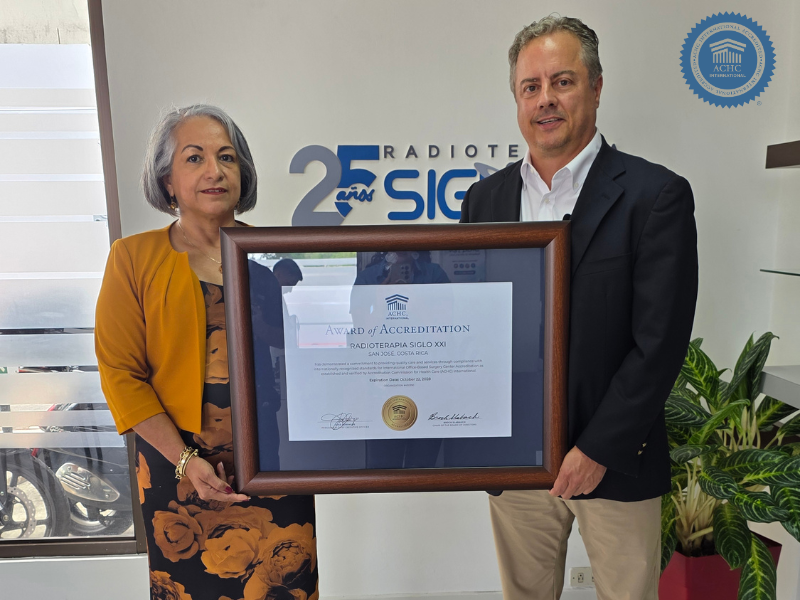
For 12 consecutive years, Radioterapia Siglo XXI Medical Center has maintained international accreditation, making it the only oncology center in Costa Rica and the region to hold this distinction.

When we receive a cancer diagnosis, our first priority is finding the best possible treatment. However, a common and understandable question soon follows: How can I be sure that the care I receive meets the highest standards of safety and quality? The answer lies in international accreditation..

En Radioterapia Siglo XXIwe understand that trust is built on verifiable facts. That is why holding accreditation from the ACHC International is the foundation of our commitment to healthcare in Costa Rica, ensuring that every procedure is performed in accordance with global standards of safety and precision.

Radioterapia Siglo XXI receives the Accreditation Commission for Health Care (ACHC) International accreditation for the third consecutive time.

What Is ACHC International Accreditation?

La ACHC International is a nonprofit organization based in the United States, globally recognized for accrediting quality in healthcare services. When an oncology center receives this accreditation, it means it has successfully passed a comprehensive evaluation of its clinical, administrative, and safety processes.

For patients, this accreditation provides the assurance that the medical center not only has the appropriate technology, but also uses it in accordance with international protocols that minimize risks and maximize treatment effectiveness.

Key Differentiators of an ACHC International–Accredited Center

Choosing a center like Radioterapia Siglo XXI, which complies with ACHC International standards, offers essential clinical and patient-centered advantages:

  • Patient Safety at the Center of Every Process: The accreditation requires continuous oversight of radiation dose delivery. Multiple layers of safety checks are implemented to ensure that the radiation beam targets only the tumor tissue, protecting the surrounding healthy organs with millimeter-level precision.
  • World-Class Clinical Protocols: Receiving treatment at an accredited center in San José, Costa Rica, ensures that clinical protocols are aligned with those used at leading hospitals in the United States and Europe. ACHC accreditation certifies that patient care is based on the latest scientific evidence.
  • Technology Maintenance and Calibration: Advanced technology (such as VMAT or IMRT) is only effective when it is properly calibrated. International accreditation requires rigorous oversight of preventive equipment maintenance to ensure optimal performance during every treatment session.
  • Quality of Patient Care: Beyond the technology, ACHC evaluates ethical practices, respect for patients' rights, and continuity of care. This ensures an environment where every patient is heard, respected, and supported throughout their treatment journey.

The Value of Excellence in Costa Rica

For Costa Rican families, accreditation ACHC International eliminates the need to seek treatment outside our borders. Having a center in the country that meets these international standards allows patients to receive world-class care without being separated from their family support network—an emotional factor that plays a vital role in the cancer recovery journey.

Choosing an accredited medical center is, ultimately, an investment in peace of mind.. En Radioterapia Siglo XXIcertified quality is not a goal that has been achieved, but a standard we strive to raise every day, giving our patients the opportunity to fight cancer with the best tools that modern medicine has to offer.

We invite you to read ¿Cuáles son los mitos más comunes de la radioterapia? and to help dispel some of the common misconceptions that society associates with this treatment.

What are the most common myths about radiation therapy?

Mitos de la radioterapia

Receiving the news that you or a loved one needs radiation therapy can be overwhelming, often because of the misinformation surrounding this treatment. Many myths and misconceptions persist, making it natural to feel uncertain. However, understanding the scientific facts is the first step toward facing the process with confidence and peace of mind. Radioterapia Siglo XXIin San José, Costa Rica, we are committed to providing clear, accurate information and compassionate, professional care. Below, we debunk some of the most common myths about radiation therapy so you can make informed decisions about your health.

Myth 1: “Radiation therapy is a painful treatment.”

The Reality: This is perhaps the most widespread myth. Receiving external radiation therapy is similar to having an X-ray the treatment itself is completely painless during each session. Patients do not feel the radiation while the machine is delivering it. Although some side effects, such as skin irritation or fatigue, may develop over the course of treatment, the radiation therapy session itself does not cause physical pain at the time it is administered.

Myth 2: “I will become radioactive and be a danger to my family.”

The Reality: It is a common concern, but with external beam radiation therapy, —the most common type of radiation treatment—the radiation does not remain in the body once the machine is turned off. You can safely hug your children, sleep next to your partner, and be around pregnant women without posing any risk. The radiation only acts during the few seconds or minutes that the treatment is being delivered directly to the tumor. Note: In certain cases, such as brachytherapy or nuclear medicine treatments, your physician may provide specific safety instructions. However, for the vast majority of patients receiving external beam radiation therapy, there is no risk of emitting radiation after treatment.

Myth 3: “Radiation therapy always causes hair loss.”

The Reality: Unlike chemotherapy, which is a systemic treatment that affects the entire body, radiation therapy is a highly targeted treatment, localized treatment.This means it only affects the specific area where the radiation beam is directed. For example, if you receive radiation therapy to the pelvis or abdomen, you will not lose the hair on your head. Hair loss only occurs if the scalp itself is included in the treatment area.

Myth 4: “Radiation therapy is only for terminal cases.”

The Reality: Nothing could be further from the truth. Radiation therapy is one of the most effective curative treatments available for cancer. Many patients achieve complete remission through radiation therapy, either as a standalone treatment or in combination with surgery and chemotherapy. Depending on the type and stage of cancer, its goals may include:

  • Curative Eliminar el tumor por completo.
  • Adyuvant: Asegurar que no queden células microscópicas tras una cirugía.
  • Paliative To improve quality of life by relieving symptoms in advanced stages of cancer.

Myth 5: “Radiation will damage all of my healthy organs.”

The Reality:
Thanks to the advanced technology available at specialized centers like Radioterapia Siglo XXI, we can deliver highly precise treatments using techniques such as IMRT (Intensity-Modulated Radiation Therapy) and VMAT (Volumetric Modulated Arc Therapy). These technologies shape the radiation beam to match the exact size and contour of the tumor, maximizing the dose to the cancer while minimizing exposure to the surrounding healthy tissues with millimeter-level precision.

Confidence and Advanced Technology in Costa Rica

Facing cancer requires both a compassionate team and advanced technology. Radioterapia Siglo XXI we are proud to provide treatment that meets international standards, ensuring every patient receives the right dose, delivered to the right place, with the highest level of precision. Our goal is to minimize risks, protect healthy tissue, and maximize treatment outcomes.

If you would like to learn more about our radiation therapy treatments, you can email us at info@siglo21.cr or get in touch with us through our contact channels.

¿Navidad y cáncer? Consejos para fin de año

Navidad y cáncer

La temporada de fin de año, con sus festividades y reuniones, suele estar marcada por una gran expectativa de alegría. Sin embargo, cuando se está afrontando un diagnóstico o tratamiento oncológico, como la radiation therapy, estas fiestas pueden traer consigo desafíos emocionales y físicos únicos. En Radioterapia Siglo XXI, sabemos que su bienestar es la prioridad. Por ello, hemos preparado una guía con consejos esenciales para ayudarle a navegar navidad y fin de año y celebrar de una manera que honre su salud y sus emociones.

Establezca Límites Claros y Saludables

El mayor desafío de las fiestas de fin de año es la presión social para participar en exceso. Recuerde que su salud es lo primero.

  • Priorice su Energía: El cansancio es un efecto secundario común del tratamiento. Si decide asistir a un evento, planifique una duración corta y comuníqueselo al anfitrión de antemano. Es válido decir: «Vendré solo por una hora».
  • Aprenda a Decir «No» sin Culpa: No tiene que justificar el rechazo a una invitación. Un simple «Gracias por pensar en mí, pero necesito descansar» es suficiente. Lo invitamos a ver el video de nuestra psicóloga Vera Campos: Celebrar cuando todo está oscuro: cáncer y navidad.
  • Modifique las Tradiciones: Si la tradición familiar es viajar lejos, proponga una reunión más pequeña y cercana en casa este año. Las tradiciones se adaptan a las necesidades de quienes ama.

Cuide su Salud Física y Maneje la Inmunidad

En un entorno social más concurrido, es vital tomar precauciones adicionales, especialmente si su sistema inmunológico está comprometido debido al tratamiento.

  • Lávese las Manos Constantemente: Mantenga una higiene rigurosa, especialmente antes de comer y después de saludar a otros.
  • Evite el Contacto con Enfermos: Pida amablemente a sus seres queridos que se abstengan de visitarle si tienen síntomas de resfriado o gripe.
  • Nutrición Inteligente en Fiestas: El exceso de comidas durante fin de año puede causar malestar. Siga, en la medida de lo posible, la dieta recomendada por su nutricionista. Si va a comer fuera, elija porciones pequeñas y evite alimentos crudos o poco cocidos que puedan aumentar el riesgo de infección.

Gestione la Carga Emocional: Está Bien No Estar «Feliz»

El contraste entre su realidad y la atmósfera festiva puede intensificar sentimientos de tristeza o soledad.

  • Valide sus Emociones: Es normal sentirse triste, frustrado o ansioso. Permítase sentir estas emociones sin juzgarse. Hable con su pareja, un amigo de confianza o un psicólogo si lo necesita.
  • Enfoque en el Significado, No en la Perfección: Concentre su energía en el verdadero significado de la temporada: la conexión, el amor y la gratitud, en lugar de la decoración o el regalo perfecto.
  • Busque Momentos de Calma: Dedique tiempo diario a actividades que le brinden paz, como la meditación, leer, o simplemente disfrutar de una bebida caliente. El bienestar mental es parte de su tratamiento.

Permítase Redefinir la Celebración

Las celebraciones de fin de año no tienen por qué ser grandes para ser significativas.

  • Cree Nuevas Tradiciones: Si no puede viajar, tal vez una nueva tradición sea una videollamada especial con familiares lejanos o una noche de películas festivas en casa.
  • Delegue Tareas: No intente manejar toda la preparación (cocinar, comprar, decorar). Pida ayuda a sus familiares; la mayoría estará encantada de contribuir.
  • Enfoque Local: Si se encuentra en San José o cualquier parte de Costa Rica y busca una celebración tranquila, considere una actividad local y de bajo esfuerzo que le sea placentera.

En Radioterapia Siglo XXI, estamos comprometidos a que el tratamiento de radiation therapy se integre lo mejor posible a su vida. Esperamos que estos consejos le permitan disfrutar de un fin de año tranquilo y centrado en su recuperación.

A Story of Hope… Breast Cancer at 25

Arantxa was diagnosed with breast cancer at the young age of 25. Today, we share her story of hope and reflect on the journey many survivors have faced—the courage to move forward and confront an oncological diagnosis.

Here is her story:

I was diagnosed with breast cancer at 25.

Ironically, I was graduating as a radiologic technologist—a field where we are trained and familiar with such conditions—but I never imagined my first contact with it would be as a patient rather than as a professional.

I won’t deny it—it’s not an easy diagnosis to digest. One is never truly ready for that kind of news.

What I would tell anyone who has just received this diagnosis is, first: everything passes. Just as we are receiving life-changing news in that moment, there will also come a day—if we hold onto faith—when we’ll hear that we are cancer-free. And when that day comes, there’s no greater satisfaction.

You have to hold on to everything you can—your support network, the people who are like angels life puts in your path, whether they’re doctors, healthcare professionals, or anyone you meet during the process. All of that helps. The way to get through it is to face it one day at a time.

My first stage of treatment was chemotherapy, which lasted six months. Thanks to God, the results were excellent. Afterwards, I had surgery, which went quite smoothly.

The final and one of the most important stages to prevent recurrence was radiation therapy. Given my academic background, the first place I thought of was RSiglo XXI, because I knew that if I could be treated there, I would not only receive world-class treatment comparable to any first-world country, but also excellent care and human warmth to ensure the best possible outcome.

During treatment, not every day was easy or positive—there were ups and downs. Here, I found not only clinical support but also emotional and human support.

Being treated at Radioterapia Siglo XXI was truly a blessing in my journey.Read her full testimonial at enlace.

🌸 Beyond the Diagnosis: What Every Young Woman Should Know About Breast Cancer

The testimony of a 25-year-old woman diagnosed with breast cancer reminds us of a reality more and more specialists are seeing: cancer has no age. Although most cases occur after age 40, the number of young women diagnosed has been rising in recent years.

En Radioterapia Siglo XXI,we support patients of all ages with a comprehensive approach that combines advanced technology, clinical precision, and deep human commitment..

Can I Be Diagnosed with Breast Cancer at a Young Age?

Yes. Although breast cancer is more common in women over 40, it can also appear in younger women. In fact, between 5% and 7% of cases are diagnosed before age 40, according to international data.

In young women, this cancer type can be more aggressive due to genetic, hormonal, or lifestyle factors. That’s why early detection and medical consultation at the first sign of change are essential.

What Risk Factors Increase the Chance of Developing Breast Cancer at a Young Age?

Some factors that may increase risk include:

  • Family history of breast or ovarian cancer (mother, sister, grandmother)
  • Hereditary genetic mutations such as BRCA1 or BRCA2
  • Menstruación temprana o exposición prolongada a estrógenos.
  • Excessive alcohol consumption, smoking, or obesity o obesidad.
  • Sedentary lifestyle or lack of physical activity

However, many women diagnosed have no known risk factors—so regular medical monitoring is key.

What Screenings Are Recommended, and at What Age Should They Begin?

Early detection saves lives. In general:

  • From age 20: Monthly breast self-exam, ideally one week after menstruation.
  • From age 25: Annual medical evaluation with a clinical breast exam.
  • From age 35, or earlier if there’s family history The doctor may recommend breast ultrasound or mammogram, depending on each case. o una mamografía, según el caso.

In young women, dense breast tissue can make mammogram readings harder, so specialists may suggest complementary imaging such as MRI.

When Is Radiation Therapy Appropriate for Breast Cancer Patients?

Radiation therapy is an essential part of breast cancer treatment, especially after breast-conserving surgery or when reducing the risk of recurrence.

At Radioterapia Siglo XXI, we use advanced techniques that allow us to precisely treat the affected area while protecting healthy tissue, such as:

  • Deep Inspiration Breath Hold (DIBH): A technique that controls breathing to move the heart away from the radiation field, minimizing cardiac risk.
  • Image-Guided Radiation Therapy (IGRT): Ensures radiation is delivered exactly to the target area in every session.
  • 3D Planning and Intensity-Modulated Radiation Therapy (IMRT): Optimize the radiation dose, adapting it to the shape of the tumor and surrounding organs.

These technologies allow for safer, more precise, and personalized treatments—with excellent clinical outcomes and a better quality of life for each patient. Other Common Questions About Breast Cancer in Young Women

Does breast cancer always form a lump?
Not necessarily. Some types don’t produce palpable masses, which is why imaging tests are essential.

Can I have children after breast cancer treatment?
Yes. Many treatments allow fertility preservation—discuss options with your oncologist before starting therapy.

Do stress or chest injuries cause cancer?
There’s no scientific evidence linking them directly. However, maintaining a healthy lifestyle and reducing stress contribute to overall well-being.

What can I do after treatment?
Keep up with regular check-ups, maintain a balanced diet, exercise moderately, and take care of your emotional health—these are key steps toward recovery.

Technology, Precision, and Human Care

At Radioterapia Siglo XXI, every treatment is planned using cutting-edge equipment and led by a highly specialized medical team. We believe that technology saves lives, but human care transforms the healing experience.

When Does Cancer Show No Symptoms? Warning Signs

In many cases, cancer can progress silently without showing clear signs. However, there are warning symptoms that, although they may seem mild or related to other conditions, deserve medical attention. In Costa Rica, the cancers with the highest incidence include prostate, breast, gastric, colon, and lung cancer. Knowing their possible manifestations can make the difference between an early and an advanced diagnosis.

What Symptoms May Be Related to Prostate Cancer?

Prostate cancer is the most common cancer among Costa Rican men. According to data from the Ministry of Health, it represents a significant percentage of annual diagnoses in the country.

Learn more about prostate cancer here here

Warning signs not to ignore:

  • Difficulty urinating or weak urine flow.
  • Frequent need to urinate, especially at night.
  • Blood in the urine or semen.
  • Pain in the lower back or hips.

A preventive checkup can detect the disease before more serious symptoms appear.

What Signs Can Indicate Breast Cancer?

Breast cancer is the leading cause of cancer-related death among women in Costa Rica. Early detection significantly increases the chances of successful treatment.

Learn more about breast cancer here

Warning signs:

  • Presence of a lump in the breast or underarm.
  • Changes in the skin of the breast (dimpling, redness).
  • Alterations in the nipple (retraction, discharge).
  • Pain or changes in breast size.

Monthly self-examinations and regular mammograms save lives.

How Do Gastric and Colon Cancers Manifest?? Algunas de sus señales.

In Costa Rica, gastric and colorectal cancers have a high incidence, especially among people over 50.

Warning signs of gastric cancer:

  • Persistent abdominal pain.
  • Nausea, frequent vomiting, or loss of appetite.
  • Unexplained weight loss.
  • Blood in vomit or dark stools.

Warning signs of colon cancer:

  • Changes in bowel habits (constipation, persistent diarrhea).
  • Rectal bleeding or blood in the stool.
  • Feeling of incomplete evacuation.
  • Abdominal pain or intense gas.

Do not ignore long-lasting digestive changes — your body may be sending warning signals.


What Symptoms Can Lung Cancer Cause?

Lung cancer remains one of the most aggressive and deadly cancers. Smoking, secondhand smoke, and pollution are major risk factors.

Warning signs:

  • Chronic cough that does not improve.
  • Chest pain when coughing or taking deep breaths.
  • Coughing up blood.
  • Shortness of breath or wheezing.

A timely X-ray or CT scan can make all the difference.

Why Is It Vital to Address These Symptoms Early?

The Early diagnosis makes the difference between a less invasive and a more complex treatment. In Costa Rica, survival rates increase significantly when cancer is detected at an early stage. marca la diferencia entre un tratamiento menos invasivo y uno más complejo. En Costa Rica, la tasa de supervivencia aumenta considerablemente cuando el cáncer se detecta en etapas iniciales.

Remember: it’s not about panicking over every symptom, but about paying attention, getting medical checkups, and not postponing preventive screenings.

Cancer Treatments in Costa Rica: Options and Advances

Several treatment alternatives are available in the country:

  • Oncological surgery to remove localized tumors.
  • Chemotherapy and targeted therapies that attack cancer cells throughout the body.
  • Immunotherapy, which strengthens the immune system to fight the disease.
  • Radiotherapy, a high-precision option that destroys tumor cells with minimal impact on healthy tissues.

At our medical center, we offer advanced radiotherapy technology designed to treat with precision and safety, providing patients with an effective and less invasive alternative compared to other treatments.

Conclusion: Listening to your body’s signals and acting early can save your life. Do not ignore warning symptoms and trust a specialized team in cancer detection and treatment.

Visit our YouTube channel to watch real testimonials from some of our patients.